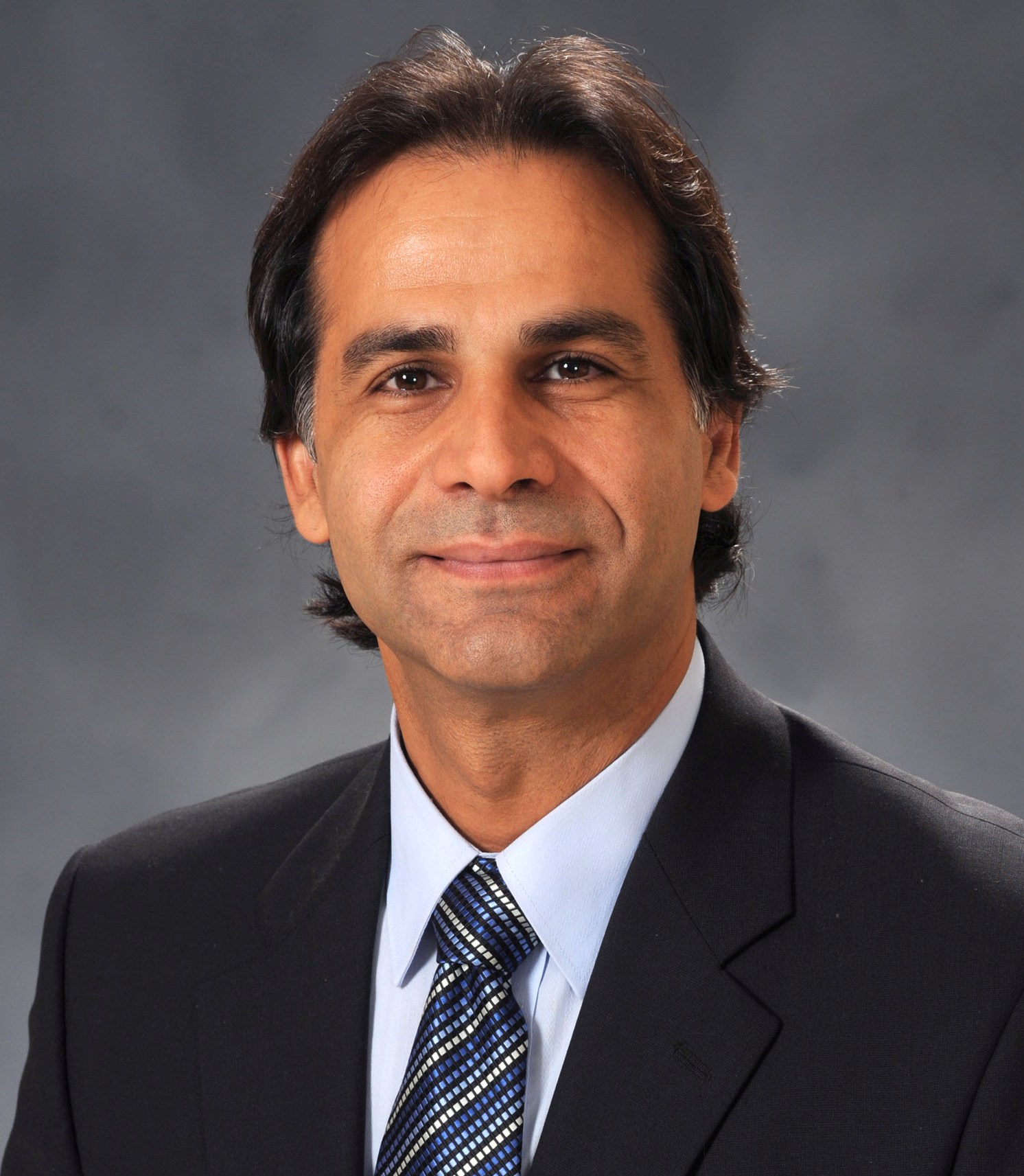
Abbas Shilabin, Ph.D.
Professor (Organic and Medicinal Chemistry)
- shilabin@etsu.edu
- 423-439-6917
- 401 Brown Hall
Shilabin Research Group Website
Education and Training
| Years | Degree/Role | Institution |
| 1990 | B.S. (Applied Chemistry) | Tabriz University |
| 1996 | M.S. (Polymer Chemistry) | Tabriz University |
| 2005 | Ph.D. (Organic Chemistry( | Clausthal University of Technology |
| 2005–2007 | Post-Doctoral Fellow | University of Mississippi |
| 2007–2009 | Post-Doctoral Fellow | Temple University |
| 2009–2012 | Post-Doctoral Fellow | Wesleyan University |
Short Bio
Dr. Abbas G. Shilabin joined ETSU in 2014 and currently serves as an Associate Professor of Organic Chemistry. He earned his Ph.D. in Organic Chemistry from Clausthal University of Technology in Germany, where he specialized in the synthesis of bioactive heterocyclic compounds. His postdoctoral work, supported by the NIH, included research in natural products chemistry, β-lactamase inhibitors, and bioorganic synthesis at the University of Mississippi, Temple University, and Wesleyan University.
Teaching Philosophy
I believe that teaching, in general, and the teaching of organic chemistry, in particular, needs to go beyond the instruction of purely technical skills. Teaching chemistry is more than just lecturing about theoretical concepts; it is about showing students how they can use chemistry to solve problems in real life and better understand the world. For example, in an elective course designed for non-majors, my efforts would be directed towards meeting course mandated goals and emphasizing the development of skills and knowledge that would enable each student to enter the larger world equipped with an informed view of the role of chemistry in modern life. In upper level courses that contain a high proportion of science majors, I would strive to establish frameworks that tap into and build upon existing knowledge rather than emphasize the rote memorization or pattern recognition of fundamental concepts. Examinations and lab-based coursework would reflect this approach, with each serving as an opportunity for students to apply their knowledge in novel ways instead of simply reiterating principles.
Courses Taught
CHEM-2010 - Organic Chemistry I
CHEM-2011 - Organic Chemistry Lab I
CHEM-2020 - Organic Chemistry II
CHEM-2021 - Organic Chemistry Lab II
CHEM-3008 - Introduction to Honor Thesis
CHEM-4621 - Advanced Integrated Lab-Structure
CHEM-5541 - Organic Reaction Mechanisms
CHEM 5957 - Special Topics in Chemistry (Medicinal Natural Products)
BIOL 4147/5147 Biochemistry of Macromolecules (Lecture and Lab)
Favorite Thing About ETSU
My favorite thing about ETSU is the supportive and collegial atmosphere that encourages both teaching and research excellence. I particularly enjoy working closely with motivated students and guiding them through hands-on research experiences that spark curiosity and prepare them for future scientific careers.
Research
Dr. Shilabin's research focuses on synthetic and medicinal chemistry, with current projects involving the discovery and development of novel antibiotics, cannabinoid receptor modulators, PARP1 inhibitors, and radioprotective agents. He actively mentors undergraduate and graduate students, integrating research into education. His work has been supported by institutional and external grants, and he collaborates across disciplines on drug discovery and natural product research.
Selected Publications
- Arije, A.T.; Agbakpo, A.E.; Patel, S.G.; Fox, S.J.; Shilabin, A.G. Isolation and structural determination of cyclic dipeptides produced by Arthrobacter sp. Nat. Prod. J. 2025, 15 (7), 9. DOI: 10.2174/0122103155345478241106061631.
- Obaji, H.; Shilabin, A. G.; Majumdar, S.; Ibrahim, M. A. Pyrrolobenzodiazepines: natural sources, therapeutic uses, and future in neurological treatments. Med. Chem. Res. 33, 2024, 36-46. https://doi.org/10.1007/s00044-023-03177-w
- Ospanov, M.; Sulochana, S.P.; Paris, J.J.; Rimoldi, J.M.; Ashpole, N.; Walker, L.; Ross, S.A.; Shilabin, A.G.; Ibrahim, M.A. Identification of an Orally Bioavailable, Brain-Penetrant Compound with Selectivity for the Cannabinoid Type 2. Receptor. Molecules 2022, 27, 509. https://doi.org/10.3390/molecules27020509.
- Mingle, D.; Ospanov M.; Radwan, M. O.; Ashpole, N.; Otsuka, M.; Ross, S. A.; Walker, L.; Shilabin, A. G.; Ibrahim, M. A. First In Class (S,E)-11-[2-(Arylmethylene)Hydrazono]-PBD Analogs As Selective CB2 Modulators Targeting Neurodegenerative Disorders. Med. Chem. Res. 2020, 1-11. https://doi.org/10.1007/s00044-020-02640-2.
- Ward, A. L.; Manikindi, P.; Borisova, R.; Shilabin A. G.; Lampson, B. C. A small inhibitory compound produced by a soil isolate of Rhodococcus has strong activity against the veterinary pathogen R. equi. PLOS ONE. 2018, 13 (12): e0209275. https://doi.org/10.1371/journal.pone.0209275
- Ibrahim, M. A.; El-Alf, A. T.; Ezell K.; Radwan, M. O.; Shilabin, A. G.; Kochanowska, A. J.; Abd-Alla, H. I.; Otsuka, M.; Hamann, M. T. Marine Inspired 2-(5-Halo-1H-indol-3-yl)-N,N-dimethylethanamines as Modulators of Serotonin Receptors: An Example Illustrating the Power of Bromine as Part of the Uniquely Marine Chemical Space. Mar. Drugs 2017, 15 (8), 248 (1-14). https://doi.org/10.3390/md15080248
- Shilabin, A. G.; Dzhekieva, L.; Misra, P; Jayaram B.; Pratt, R. F. 4-Quinolones as Noncovalent Inhibitors of High Molecular Mass Penicillin-Binding Proteins. ACS Med. Chem. Lett. 2012, 3, 592-595. https://doi.org/10.1021/ml3001006.
- Shilabin, A. G.; Kasanah, N.; Wedge, D. E.; Hamann, M.T. The Lysosome and HER3 (ErbB3) Selective Anticancer Agent Kahalalide F: Semisynthetic Modifications and Structure-Activity Relationship Studies. J. Med. Chem. 2007, 50, 4340-4350. https://doi.org/10.1021/jm061288r.