-
Spring 2020: Patrick Brown
Featured Teacher: Patrick Brown
The CTE is happy to feature Dr. Patrick Brown and welcome him as a new CTE Faculty Fellow. An East Tennessee native, PhD. in Cellular Biology from the University of Georgia, recipient of many teaching awards and honors including the ETSU Distinguished Faculty Award in Teaching , Dr. Brown is Associate Professor of Health Sciences with the College of Public Health at ETSU. Much of his scholarly work focuses on the application of student-centered active-learning pedagogies in undergraduate science curricula.
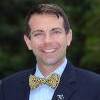
With his sparkling quick wit and matching bow tie, Brown is a familiar and welcome presence to students and faculty in the College of Public Health where he teaches several courses on biology and anatomy and physiology. His infectious enthusiasm for cellular biology is matched only by his passion for teaching. He brings the diligence of a laboratory scientist to bear on the scholarship of teaching and learning. Also, he just plain loves teaching and cannot imagine doing anything else.
If you were one of the hundreds of students who have taken anatomy and physiology or clinical parasitology with Dr. Brown, you would know there is never a dull moment in his class. This is because Brown is a master of making students take control of their own learning. One of the first activities students do in the lab section is write out descriptions of the various organs and tissues in the human body using analogies and descriptive phrases that are familiar to them. This simple practice illustrates one of the key tenants that drives the way he teaches. “All students come to me with diverse life experiences, unique perspectives, and previous knowledge that varies widely from student to student,” says Brown who explains that students don’t speak “nerd”. Not yet. But once they can view a concept through the lens of their own knowledge and experience, they can incorporate that concept into their fund of knowledge and make it their own. “Then you give them the ‘nerdy’ words and definitions,” he says with a grin.
Using POGIL (that’s Process Oriented Guided Inquiry Learning) the teacher sets up and facilitates the learning environment and guides students through by asking them questions and forcing them to figure out how to solve problems without necessarily having all the knowledge they need. While this may not always be easy, it mirrors the way scientists actually acquire new knowledge. “What better way to teach science, than to have students using the very cognitive processes that scientists use to do science?” The entire course works from this principle. Each new topic approached like a strange new city students explore with the aid of only a few hints and landmarks. By proceeding this way and articulating what they see in a way that makes sense to them, they get to know their way around the city very well by the end of the semester.
Brown is convinced this kind of inquiry-based approach is the best way to design courses for optimal student learning and persistence, especially in STEM fields and especially for traditionally underrepresented students. There is good evidence to support this, some of which Brown himself has published. Part of the reason may well be in the “process oriented” part of POGIL. Here students practice many of the core skills educators and employers alike expect from well-rounded graduates: they help each process large amounts of information, they problem solve, they work together and communicate and overcome differences, they encourage each other, they see they are in this together and they can do it.
“Teaching is not my job, it is my vocation.” Says Brown, “There is no joy like hearing two students argue over a concept, figure it out, and say to one another ‘that makes sense’.” Makes sense indeed!
-
Fall 2019: Lori Meier
Featured Teacher: Lori Meier
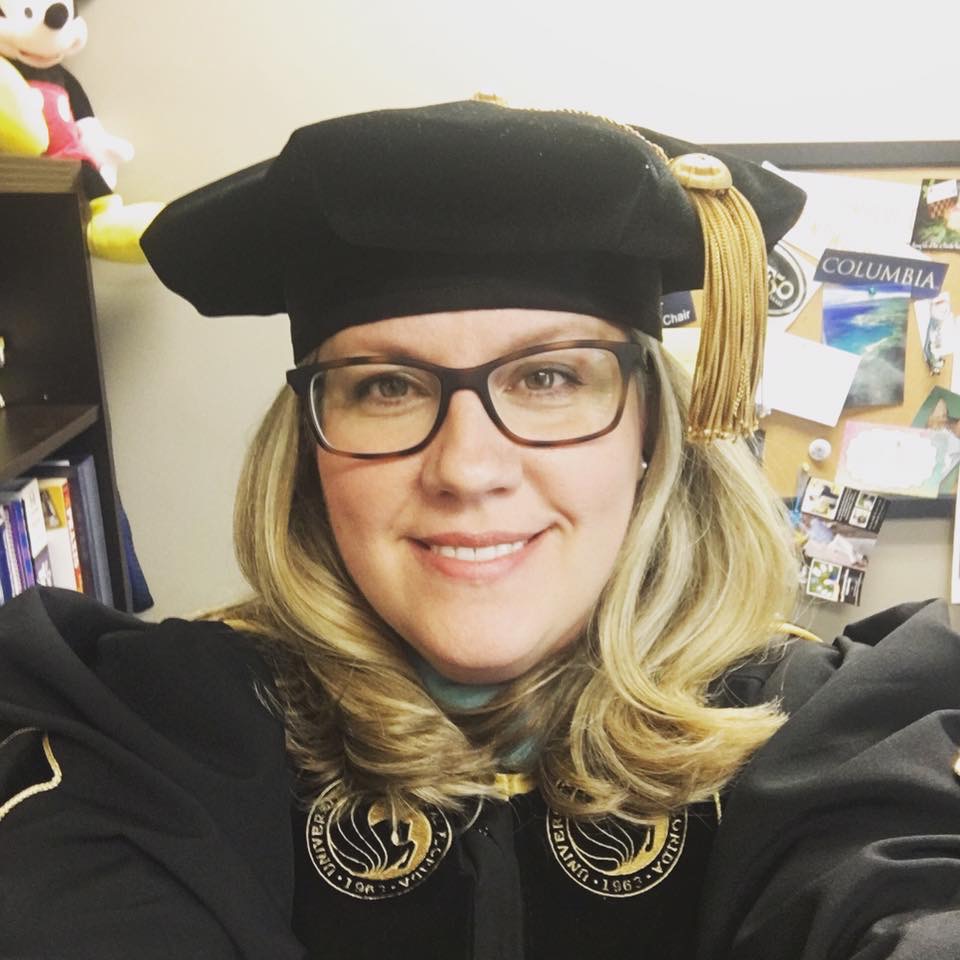
Lori Meier is the 2019 recipient of the University’s Distinguished Faculty Award for Teaching. This may be the most prestigious but is not the first award Lori has won since she began teaching at ETSU in 2008. She also been honored with Clemmer College Outstanding Faculty Teaching Award (2015) and the Clemmer College Diversity Award (2018). So what does a day in the class of such an innovative educator look like?
As a teacher who teaches teachers, Lori Meier knows the importance of engaging students from the very beginning of their studies with her. Whether teaching online or on-ground, authentic engagement begins with sharing her passion for teaching and learning. One class that has always had a special place in her heart is Social Studies Education in Multicultural Society. Not only is the content central to her scholarly and civic concerns, she also finds the class to be an ideal opportunity to model the kind of engaged pedagogy which is central to her overall approach to teaching and learning. She believes classrooms should be places of intellectual excitement where everyone is valued and their stories honored, where curiosity is championed and teachers and students interactively learn with and from each other. While engaging students in the scholarly knowledge base of teaching elementary history, geography, political science, and economics Lori's classes also spend a great deal of time discussing engaged pedagogies for elementary learners.
Such a pedagogy involves sparking curiosity and encouraging autonomy in students. “I feel really strongly that students need opportunities to explore what they are interested in learning.” She has found that one of the best ways to get students interested in their own learning is to embrace her inner nerd, follow her own curiosity and invite them to come along for the ride. Along the way, they catch on and start finding out where their personal interests lie and how they can tie these interests into their own studies. “I’ve learned that when I’m enthusiastic about an idea or topic, that my students will often follow alongside me with this contagious zeal too -- so that has taught me that it is okay for me to be myself and to be ‘contagiously nerdy’ about all things in the world.”
Engaging students also means getting to know them more personally and taking an interest in what is happening in their lives inside and outside of the classroom. She does a “morning meeting” check-in activity in which students report not just on their academic progress but also personal insights and challenges they may have. While maintaining standards and rigor, she has discovered that flexibility goes right along with autonomy. This applies equally well to online classes where she encourages students to participate in innovative and virtual classroom conversations using virtual FlipGrid video messaging to more personally connect with students.
Beyond the care and attention she gives to them, perhaps what attracts so many students to Lori’s classes is her critical perspective that education is and should be transformative. With education in crisis in so many ways, Lori feels responsible to prepare students for the difficult realities they will face as teachers, but she also encourages students to imagine and consider the way schools should and could be rather than just the ways that they currently are. “I often ask my students to consider the overall purposes of schooling, debate what and whose knowledge is of most worth, and examine power relationships in the American educational system.”
Lori’s scholarship also reflects and models the many modes of her engaged pedagogy. For example, a recent paper presentation, Reclaiming Intellectual Work with Pre-service Elementary Educators through Curriculum Studies, spoke specifically to the value of curriculum studies to undergraduate students with examples from her own classroom. Several of her publications include co-authorship with ETSU undergraduate students as she sought to teach them about scholarship in education by working together through various teaching projects. Her wide-ranging interests have also nearly led her out of this world as seen with her volunteer work in partnership with the NASA/JPL Solar System Ambassador group, which has proved to be an ideal way to merge her love of space exploration with social studies.
Lori is also an innovator not just with pedagogy but also when it comes to other elements of course design such as textbooks and materials. Among her many other awards, she is also a recipient of the first round of OER Awards in which she is replacing costly textbooks with open and affordable materials. Not only will this save money for her students, it goes right along with her notions of open and engaged pedagogy because she can select readings and content more closely related to the contours of the class as it evolves over the semester.
-
Spring 2019: Michele Pedicone
Featured Teacher: Michele Pedicone
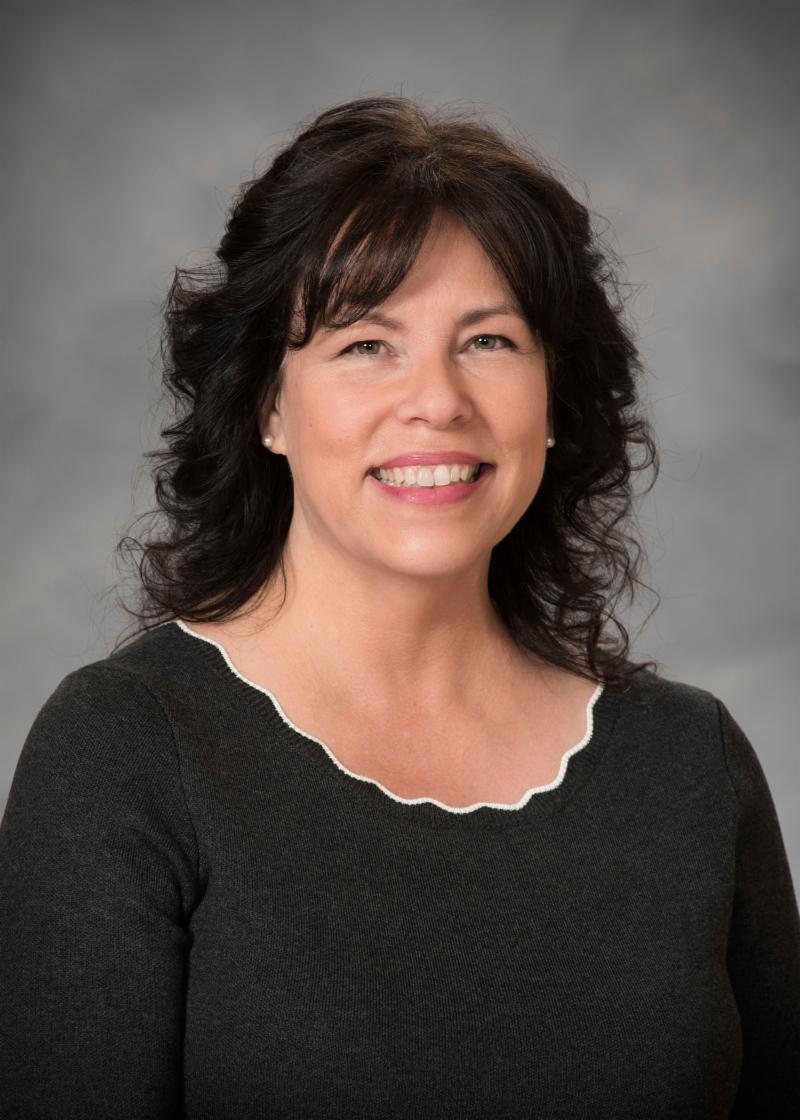
Michele Pedicone is Director of Clinical Education and Assistant Professor in the Cardiopulmonary Science program in the College of Health Sciences.
Given the big heart she has for her students, her lifelong desire to be a teacher and a natural flair for working with people, it is surprising Michele Pedicone has only been actively teaching for about five years. As a native of France who spent her formative years in Europe and Asia before widely traveling the globe, she has a broad multicultural perspective and a wealth of personal experience to share with students and colleagues. This comes out not just in daily interactions with students but through extracurricular programs she helps facilitate. She recently returned from Costa Rica where she shared her love of travel with an interprofessional cohort of students for an alternative spring break program. In collaboration with students and faculty at the Universidad Santa Paula, ETSU students travel, learn, and get hands on experience serving the health care needs of communities there.
Michele’s clinical specialty is neonatal respiratory care. Most of her students come to the program already familiar with the basics of adult respiratory care, but there are important differences when it comes to infants. She finds the best way to address any knowledge gaps is to enliven standard textbook content with stories from her extensive experience in the field, guest speakers, and case studies.
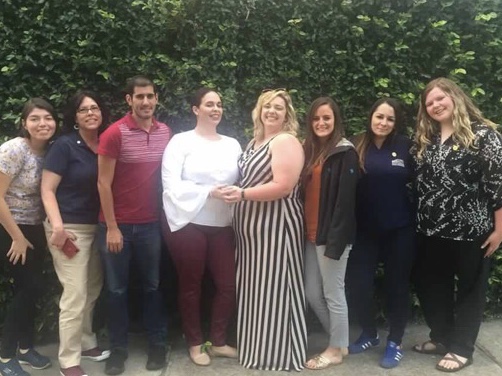 The students of both programs. ETSU students presented the respiratory students at
USP with sunflower pins to symbolize planting the seeds of respiratory awareness.
The students of both programs. ETSU students presented the respiratory students at
USP with sunflower pins to symbolize planting the seeds of respiratory awareness.Her classes are highly interactive. With minimal sage on the stage lecturing she facilitates group work largely centered around case studies. This is often the best way to see how textbook knowledge applies in practice. Sometimes the case studies are modeled on board exams but more often they are inspired by experiences she has had in the field. The program also makes use of clinical simulations and actor patients. In all these, there is more involved than arriving at an accurate diagnosis. Michele is more interested in how students get to the solution. Neonatal respiratory issues are often more complicated than they seem at first and it is important clinicians do not arrive at hasty conclusions. Beyond the diagnosis is the critical thinking process that gets you there, and the possibility of differential diagnosis.
Though she works in a highly technical field where quantitative analysis is very important, Michele has always had more passion for the people the numbers help serve. The big heart she has always had for patients now extends to students as well. “Ms. Pedicone has made a great transition into the cardiopulmonary science program,” says one of her students, Haley Worley. “I love her drive to connect with students. I have not had a teacher invest so much time into getting to know her students.” She takes a holistic approach to both health care and teaching. Just as a deep understanding of the lungs and heart requires a larger contextual understanding of human anatomy and physiology, teaching requires attention to the heart and mind of the whole student and not just content knowledge. Nothing in education or healthcare happens in a vacuum. From day one, you are working in teams with other specialists to address the needs of patients. Michele has a grounded perspective on the larger mission of clinical education in health care which more and more requires graduates to be expert communicators and team players.
She also sees teaching as a kind of mentoring, saying “they are students now, but I also consider them future colleagues.” For Michele, this means meeting students where they are as learners through active learning and empathy, and also helping them see themselves as burgeoning health care professionals and scholars. As Director of Clinical Education for Cardiopulmonary Science who is active with many professional organizations, she avidly works to plug upcoming students into the professional networks and associations they need to secure internships and other career opportunities.
-
Spring 2019: Jennifer Hunt
Featured Teacher: Jennifer Hunt
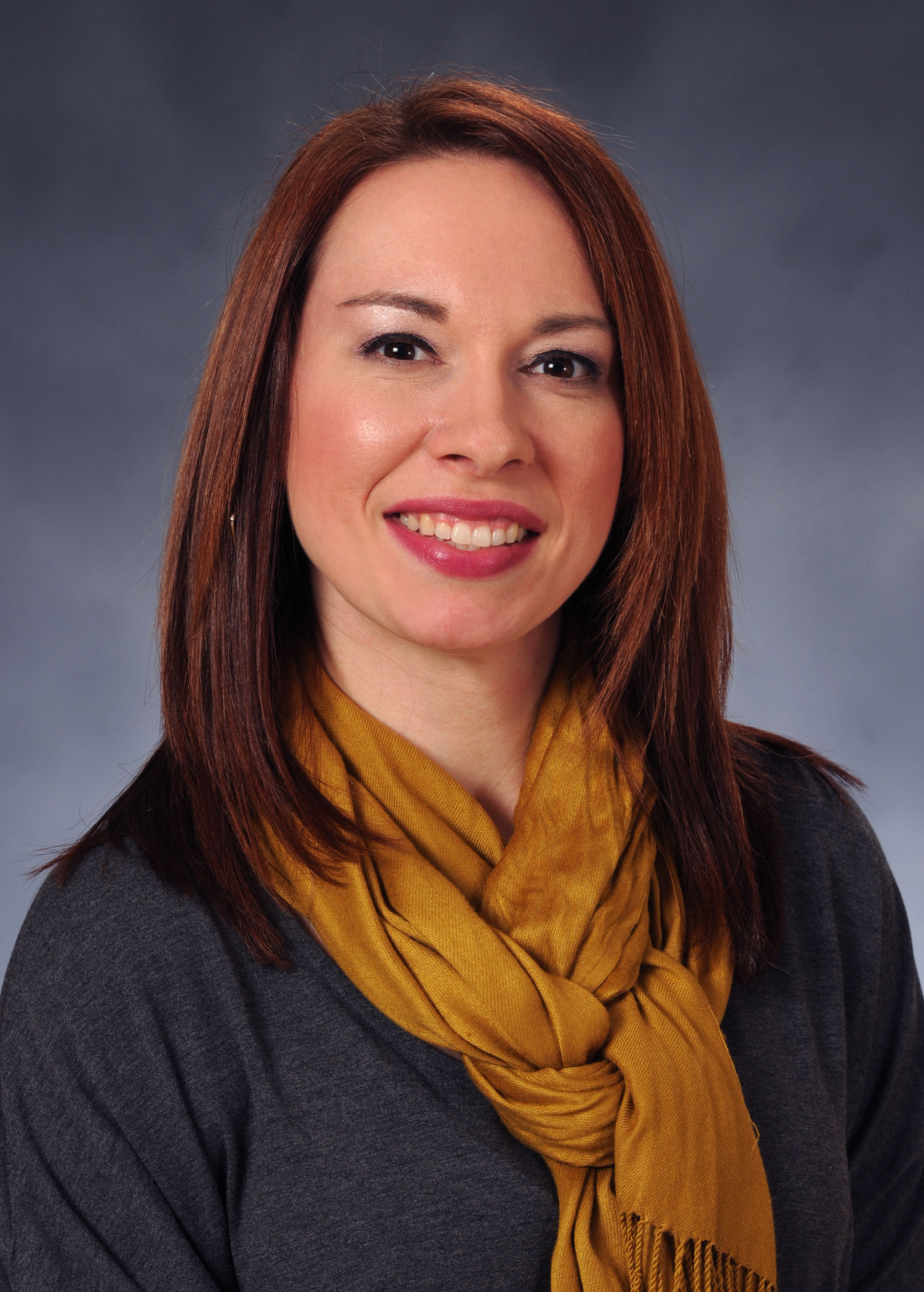
Jennifer Hunt, MPH, CMRP (AHA-CC), RHA/ACLFA works with the College of Public Health as a Lecturer and MPH Advisor.
A turning point in Jennifer Hunt’s teaching came when she began to see teaching as a kind of conversation. In a conversation, both sides play an important role. Though the teacher may do more of the talking, the students have an important say as well. The conversational approach helps Hunt come out from behind the podium, meet students where they are and help them make meaningful connections with class content and each other. Conversation is also about caring. Jennifer puts a lot of attention into making her classroom one students want to walk into, one in which they feel immediately welcome and safe. Creating this kind of environment allows the messy but real elements of learning to emerge. This involves equal parts humility and humor. “I admit my own mistakes and limitations and show them I am human just like them. This helps them see they can do this too, and we can have some fun along the way!”
In her four years with the College of Public Health she has rarely done the same thing twice. As soon as she began teaching she poured herself into professional development opportunities and soon found a rich vein of research and best-practices to consider and adapt to her teaching. “It is a bit overwhelming at first, but every year I get a little braver in making small changes.” These changes are always in the direction of increasing student engagement and active learning. Small changes might be a new way of organizing groups, presenting examples from the field, incentivizing participation, or just getting students to talk. She typically follows the fifteen minute rule, chunking content lectures and interspersing opportunities for student feedback and activity. Sometimes small changes lead to larger innovation projects, such as when she successfully flipped a strategic planning class often perceived as rather tedious by students. The flipped class model allows teachers to devote more class time to problem solving, discussion, and structured group work.
Group work is one of the most important parts of any class Hunt teaches and she devotes considerable attention and organizational acumen to making students in her groups work well with each other. Using online survey tools and spreadsheets, she brings together individuals whose interests, personalities, and schedules sufficiently overlap. Within groups, each member is assigned a role and held accountable by having other members do peer evaluations which are figured into the overall grade for the project. One reason she goes to such lengths is that she knows from experience the importance of “soft skills” employers seek from graduates and she wants to give her students ample opportunity to develop these essential communication and empathy skills.
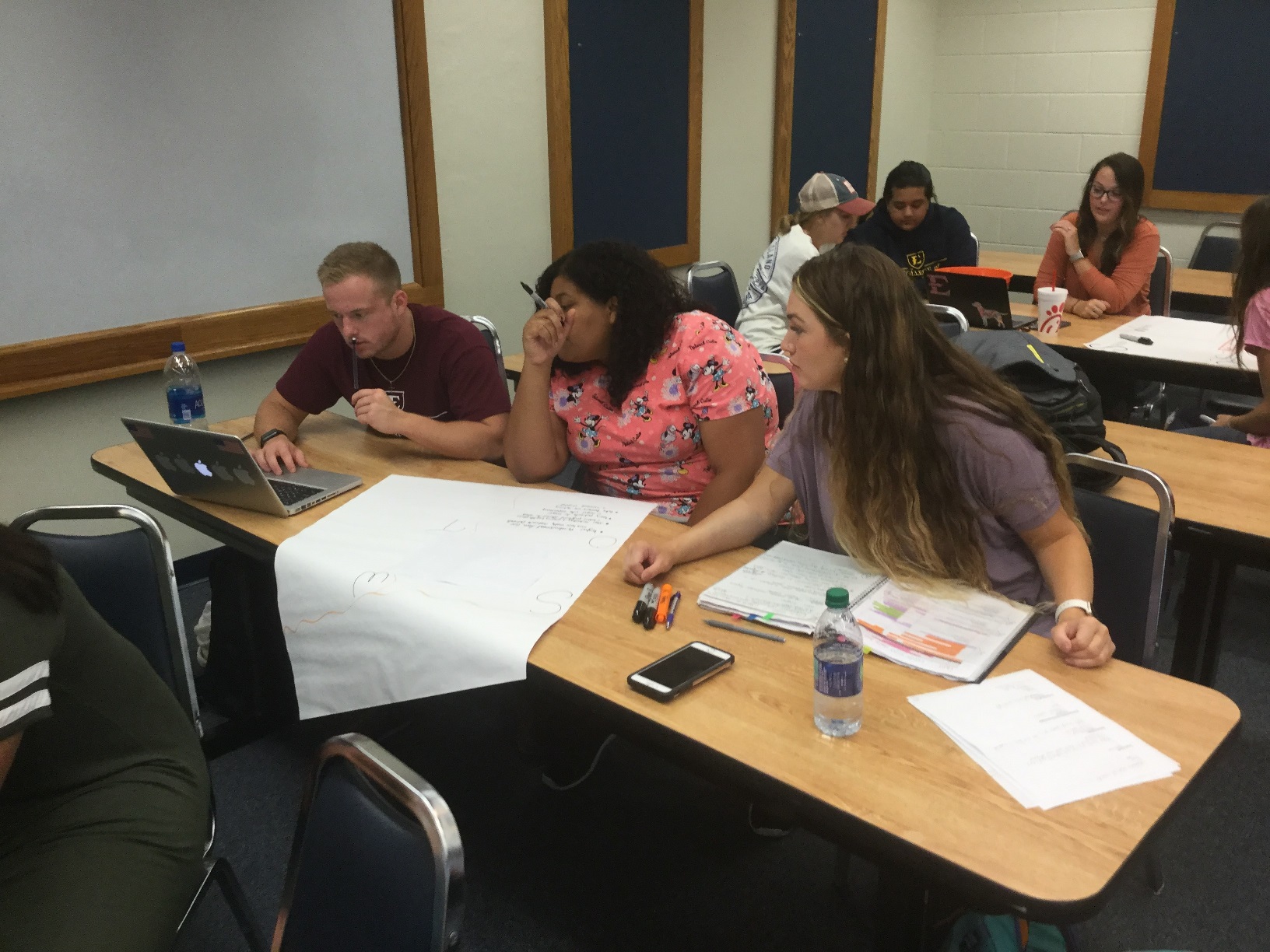 Her experiences working in various roles in the healthcare industry informs her teaching
practice. Graduates from Public Health go on to careers in roles such as hospital
management, healthcare marketing, public health departments, and nonprofits. Hunt
believes the time for students to start thinking and acting like professionals is
now and so she designs her classes to include practical applications, case studies,
and current events. Her guiding question for course design is: “What would I want
to see if I was a student in this course?” One senior level course she has taught
focused on current events in healthcare management and policy. Her approach here was
to spend one class period introducing a particular issue and pre-assessing student
background knowledge. For the next session an invited guest speaker with related professional
experience would present their perspectives and invite discussion. Toward the end
of the semester, students would group up and focus on an issue important to them and
present it to the class.
Her experiences working in various roles in the healthcare industry informs her teaching
practice. Graduates from Public Health go on to careers in roles such as hospital
management, healthcare marketing, public health departments, and nonprofits. Hunt
believes the time for students to start thinking and acting like professionals is
now and so she designs her classes to include practical applications, case studies,
and current events. Her guiding question for course design is: “What would I want
to see if I was a student in this course?” One senior level course she has taught
focused on current events in healthcare management and policy. Her approach here was
to spend one class period introducing a particular issue and pre-assessing student
background knowledge. For the next session an invited guest speaker with related professional
experience would present their perspectives and invite discussion. Toward the end
of the semester, students would group up and focus on an issue important to them and
present it to the class.The work Jennifer does in the classroom extends far beyond it. As both a lecturer and graduate advisor, she mentors and guides students both inside and outside the classroom, and students love her for it. As undergraduate Public Health major Casey Lunceford says, “Ms. Hunt goes beyond the normal duties of an instructor to ensure we, as students, are getting a world-class education. I have had the privilege of having her not only as a professor, but as a mentor and role-model during my academic career. No matter the situation or circumstances, Ms. Hunt works hard to make us successful students in-and-outside-of the classroom by acknowledging our academic and personal lives and feats. She embodies the true qualities of a great professor."
By Phil Smith
-
Fall 2018: Stacy Brown
Featured Teacher: Dr. Stacy Brown
Dr. Brown, PhD, is Associate Professor with the Bill Gatton College of Pharmacy. She has often been recognized for her teaching excellence and awarded the college's Outstanding Teacher Award twice.
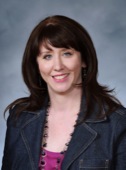
Considering all the teaching awards she has accumulated over the last ten years, it is hard to believe there was a time Dr. Stacy Brown was considering abandoning teaching. She had a passion for chemistry and pharmacy which she wanted to share with students but standing in front a class lecturing from PowerPoints held little excitement for neither her nor her students. Fortunately, a colleague recommended she explore other teaching methods before quitting and it was then she attended a conference and learned about POGIL.
Process-Oriented Guided Inquiry Learning is an active teaching technique in which students work in small groups exploring models or cases which require immediate application of course content to arrive at their own conclusions and hypotheses. In a course designed around POGIL the instructor comes out from behind the podium and circulates amongst the groups checking progress and giving feedback. In the integrated series course for pharmacy, the three or four hour block course moves briskly to the rhythm of background content "mini-lectures" followed by the guided inquiry activities followed by reflection and discussion which leads to the next round.
This approach not only reinvigorated her passion for teaching, it is also a better way to introduce students to real scenarios and challenge them to think more deeply about foundational ideas in chemistry. As new drugs are developed and released, says Dr. Brown, "I want to give them the skills that look at the chemistry of these drugs and be able to understand the new medication at a high level."
Dr. Brown's enthusiasm for active teaching informs her research as well.
"I love exposing pharmacy students to the world of both basic and applied science, forcing them to see some of the roots of the clinical sciences in which they are so engrossed. Especially fulfilling to me is seeing a student switch to a different mindset, finally seeing him or herself as both a scientist and a clinician, which I believe will ultimately make him or her better in the practice of pharmacy."
Last semester (Spring 2018), the CTE featured Dr. Brown's colleague Dr. Melton who also uses innovative techniques such as Team-Based Learning (TBL). In fact, they are two parts of an integrated series of courses in which POGIL and TBL are natural complements, both involving active learning in teams and minimal lecture. One big difference between the two is what happens outside the classroom. "A student who shows up, pays attention, and works hard will get almost everything they need in class", says Brown of POGIL. "Whereas TBL usually requires some reading before class and begins class with readiness assessments." This is another reason students enjoy POGIL, very little homework!
Looking back, Dr. Brown has come a long way out from behind the PowerPoint podium. When she came to the Bill Gatton College of Pharmacy as part of the inaugural faculty in 2007, she was able to fully roll out the POGIL method with the new curriculum. But making a transition to more active learning techniques does not require starting from scratch. "After I heard about POGIL, I began using exercises and tests from a handbook. There is some discomfort with any change but once students see the value and realize they are learning more and actually enjoying it, it gets easier to keep moving in that direction."
-
Fall 2018: Kathryn Sharp
Featured Teacher: Dr. Kathryn Sharp
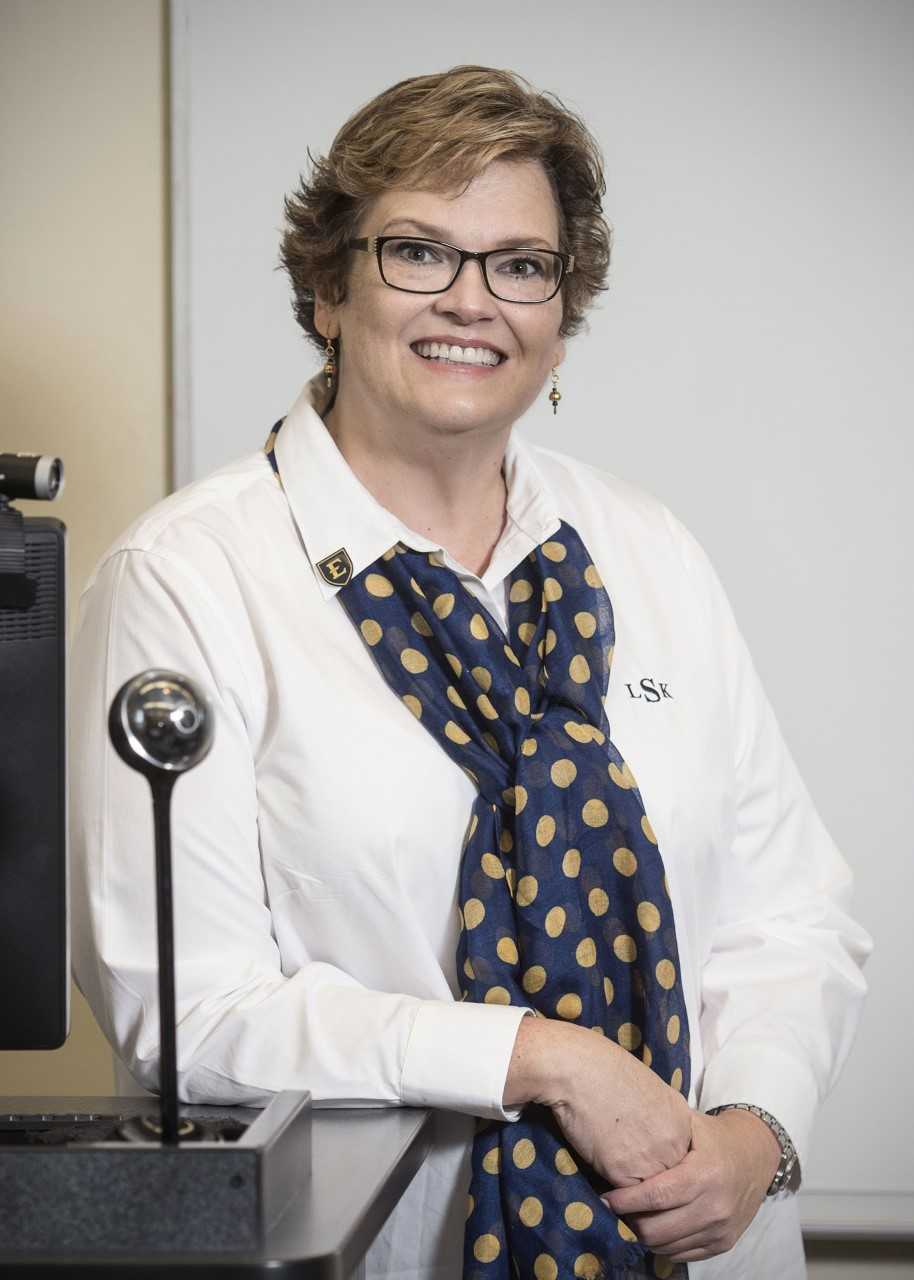
The Center for Teaching Excellence presents Featured Teacher Dr. Kathryn Sharp, Professor in the department of Early Childhood Education in the Clemmer College
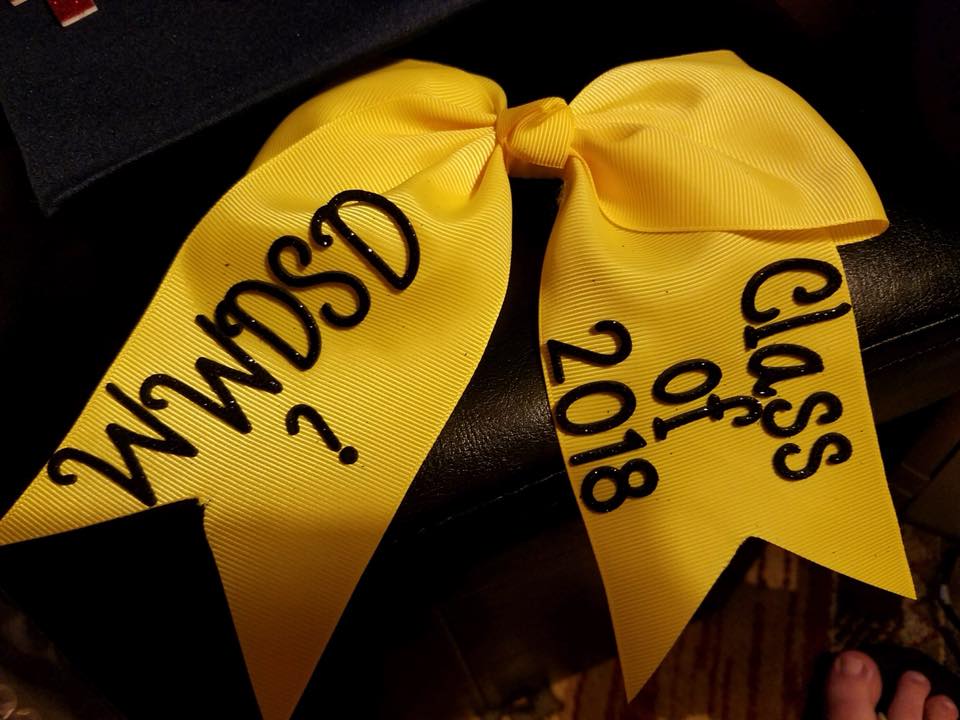
Dr. Sharp holds high expectations for all her students. While this may be daunting at first, they always come around and end up thanking her for it. Not every teacher makes it onto the graduation caps of her students. WWDSD: “What would Dr. Sharp do?” can be seen emblazoned on many a happy grad cap, a testament to the integrity and rigor of her teaching philosophy. As one recent graduate writes, “The expectations that Dr. Sharp had for me as a student molded me to become the teacher I am today. Not only was her instruction impactful and meaningful during my undergraduate studies and residency, but also in my professional teaching to date.”
Through many changes and roles, literacy has remained the focus of her career. Dr. Sharp came to higher education after several years teaching kindergarten and second grade in Memphis city schools. As is often the case, the challenges faced by many of the students in these schools goes beyond academics. Many of her students were coming from unstable homes in high poverty areas and were more worried about where their next meal was coming from than reading and the writing. “When you have second graders who cannot even read their own names yet, your priorities shift. You have to work to meet students where they are and build connections from there,” she says of her strategy. Difficult experiences like these were the crucible in which her teaching philosophy was formed and which continues to inform her work with students in higher education. She also has lots of stories to share.
 Stories are central to Dr. Sharp’s approach in the classroom. Though she questions
the merits of “edutainment” where the teacher is supposed to entertain students, she
understands and values how stories are inherently engaging and help students make
personal connections to the concepts they are learning, which in turn helps transfer
to long-term memory. “People remember stories. Stories help make the connection between
a little piece of something students are learning about and the bigger picture which
they may not yet fully grasp.”
Stories are central to Dr. Sharp’s approach in the classroom. Though she questions
the merits of “edutainment” where the teacher is supposed to entertain students, she
understands and values how stories are inherently engaging and help students make
personal connections to the concepts they are learning, which in turn helps transfer
to long-term memory. “People remember stories. Stories help make the connection between
a little piece of something students are learning about and the bigger picture which
they may not yet fully grasp.” The active structure of her class sessions reflects her notion that learning is not a spectator sport. Though students might like to sit back and take in a lecture, she may begin class with a quiz over the readings or recalling and restating previous learning. Dilemmas are another active learning approach. Drawing from her rich experiences in the classroom, these dilemmas put students in tough situations so they can see how core concepts relate to real life.
Teaching is both an art and science for Dr. Sharp. As Gail Godwin said, “Good teaching is one-fourth preparation and three-fourths pure theatre.” She believes artful presentation and personal connections are the best way to present content knowledge and best practices in teaching to students.
By Phil Smith
-
Spring 2018: Sarah Melton
Featured Teacher: Dr. Sarah Melton
The Center for Teaching Excellence presents Featured Teacher Dr. Sarah Melton, Professor of Pharmacy Practice at the Gatton College of Pharmacy
Dr. Melton has a passion for teaching and sharing knowledge that really shows in the classroom. Her drive for teaching excellence has led her to explore and adopt emerging teaching strategies best supported by research, experience, and simple observation of what helps students learn best in the classroom. She puts the learner at the center of her teaching efforts just has she encourages her students to put the patient at the center of their clinical care.
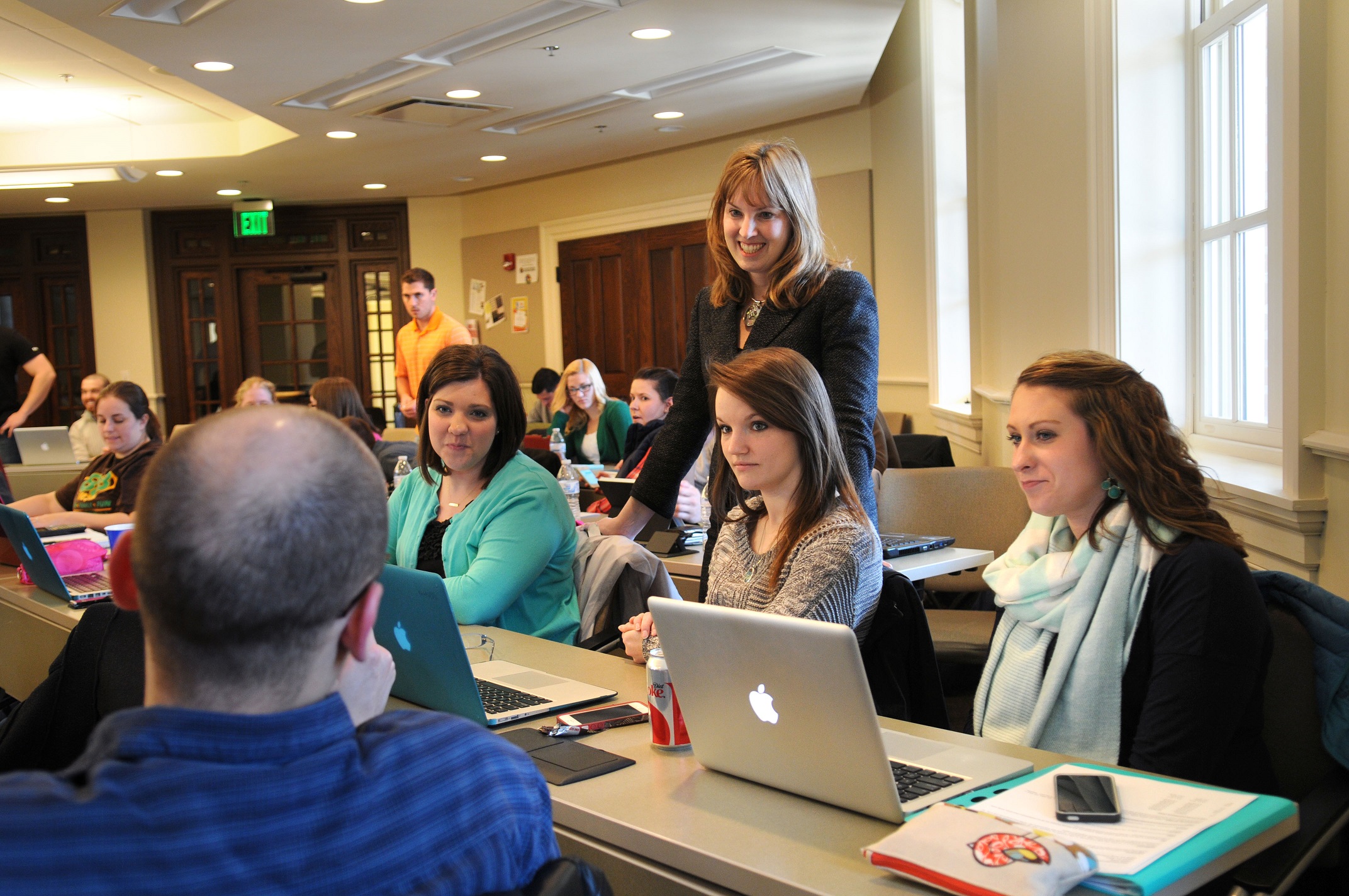
She puts these ideas into action in an integrated series of three courses in Neurologic & Psychiatric Pharmacy she coordinates. When the curriculum was redesigned a few years ago, Dr. Melton pioneered a Team-Based Learning (TBL) approach for the series. In TBL, students work in small teams on active learning exercises such clinical case studies which require them to recall and apply concepts and information from readings they must complete before class. There is minimal lecture, instead students spend class time actively engaged with problems designed to reinforce application of content. Initially, students unfamiliar with TBL may resist it since it requires a lot of work upfront and there is no hiding in the crowd of a lecture hall. But once they get into it, students report higher levels of engagement which their grades reflect.
 “Students love this type of learning, come to class prepared, and are able to apply
their learning to real-life clinical scenarios in the classroom. This leads to long-term
retention and application of knowledge.”
“Students love this type of learning, come to class prepared, and are able to apply
their learning to real-life clinical scenarios in the classroom. This leads to long-term
retention and application of knowledge.” Authentic assessment is integral part of TBL. Since students must be accountable for a lot of material before class, sessions begin with RATs and TRATs. That’s Readiness Assessment Tests and Team Readiness Assessment Tests. These are short low-stakes quizzes on the content students are to read before class. It functions both to motivate them to do the readings and give the instructor a quick overview of how well the students understand the material and where any problems may be. Students take the RAT alone, then team up and work through the TRAT together. The repeated retrieval and discussion of content helps make it stick. The higher stakes exams in the course follow the same pattern, tests are taken individually and then in teams. The final grade factors in both individual and group test attempts. Teams also do peer assessments of each other’s team performance.
Dr. Melton's teaching philosophy is concerned with the heart as well as the head of learners. The integrated series also includes experiences that foster greater self-knowledge and empathy in students by challenging them to focus on the patient before the disease. To this end, Dr. Melton hosts lunch and learns where students and patients from the community can talk and ask questions of each other. “By meeting the patient before learning about the disease, the patient is forefront in the student’s mind.” Though voluntary, lunch and learns are always very well attended. Students also read books written by or from the patient perspective in order to reflect on their own feelings and presuppositions about the disease or condition. They write and discuss how the book has changed their perspective.
These innovative teaching efforts and her many related service and research projects make Dr. Melton a highly regarded and sought after teacher. She is a local resource for TBL which she notes can be applied in many disciplines beyond pharmacy and medicine.
By Phil Smith
-
Spring 2018: Alison Barton
Featured Teacher: Dr. Alison Barton
The first featured teacher this year is the new Faculty Fellow for the Center for Teaching Excellence.
Dr. Alison Barton, Associate Professor in the Department of Educational Foundations & Special Education, is already well known around campus as an advocate for innovative teaching and learning practices. In addition to teaching undergraduate and graduate classes, you may recognize her from the many training workshops she offers through ATS and HR on various instructional practices such as critical thinking, motivation, guided learning and online discussions.
In her new role as CTE faculty fellow, Dr. Barton will be able to expand the reach of her expertise and offer workshops and personal consultations on issues related to teaching and learning, course design, and assessment. “My objective when providing these evaluations is to positively support those practices which are already in place that lead to student learning and engagement, and then to offer suggestions that might further improve the course.”
Dr. Barton’s research interests converge with her passion for teaching and learning excellence. She is currently engaged in collaborative research with other ETSU faculty on the efficacy of online guided-inquiry and the role of mindset. She is also keenly aware of the importance of engaging the whole learner and will be leading sessions on applying mindfulness techniques in the classroom.
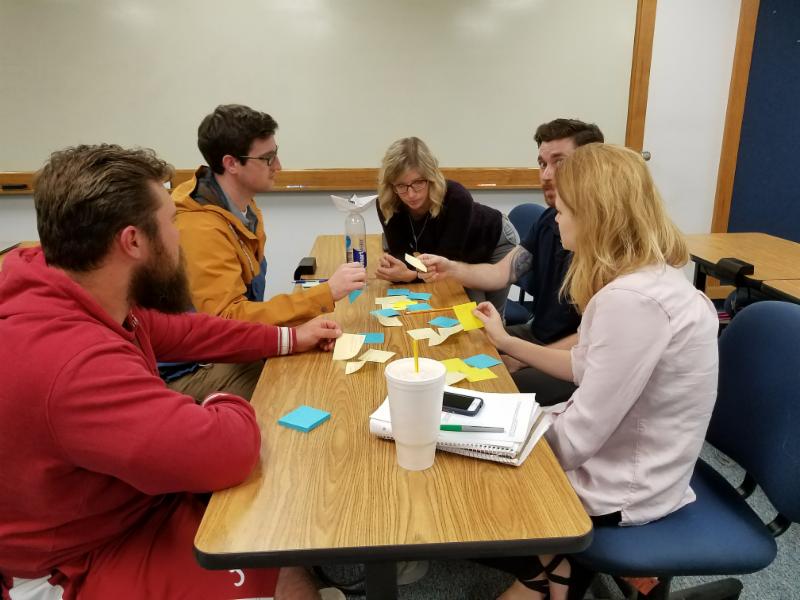
"I am fortunate in that much of the subject matter I teach is about learning and the best practices for teaching that follow. As I teach this information, I have realized that I need to be a good model of those practices. I work continuously to learn and model best instructional practices for my own students, both in on-ground and online settings."
The CTE is indebted to Dr. Barton for her service efforts. She was a core member of the Teaching Work Group from 2015 to 2017 whose many positive recommendations for improving teaching at ETSU led to the creation of the Center. Her teaching, research, and service all stem from a deep commitment to discovering and helping create the ideal conditions for learning and sharing and applying these insights at ETSU. A glimpse at her teaching philosophy reflects this well:
“I believe that teaching is about creating an environment wherein students actively develop their understanding of the information. I believe students learn best when they are given some sense of autonomy and a belief, through instructional support, that they can be successful. And I believe peak learning cannot happen if there is not a positive relationship between the instructor and the student, which is why my latest quest is to cultivate my own compassion as an instructor.”
Dr. Barton's many awards include The Clemmer College of Education and Human Development Technology Award (2011-2012), and Teaching Award (2013-2014), and the ETSU Faculty Award for Teaching (2014-2015). She has also been designated an Online Master Teacher at ETSU (2017-2018).
By Phil Smith
The Center for Teaching Excellence will feature a different faculty member each month. If you'd like to nominate a teacher to be featured on the site, contact Phil Smith.
-
Fall 2017: Michelle Hurley
Featured Teacher: Dr. Michelle Hurley
Authenticity and sensitivity are at the heart of Dr. Michelle Hurley’s teaching.
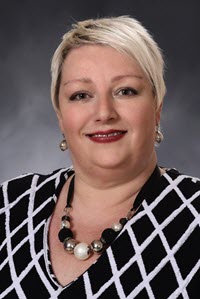
Dr. Hurley is the Assistant Project Director for the McNair Program which assists students from underrepresented segments of society to attain advanced graduate degrees. She also teaches several classes in psychology and human development as an adjunct for the Department of Counseling and Human Services.
Teaching to Create Competent Professionals
Such professionals have both their heart and their head in the game. “Some students come into human services related fields because of personal experiences with hardships. They tend to be self-motivated and intrinsically engaged. The challenge, though, is to get them to consider the necessary roles critical scholarship and evidence-based practices play in their professions.” Transferring skills gleaned from the theory and action research of the field into workplace skills is a main goal of her teaching.
One way this happens is with “show your work” thinking and writing. As in mathematical problem solving where the process is as important as the result, critical thinking involves carefully and slowly spelling out each step taken to arrive at a conclusion. Exercises such as this aim to expose how opinions often lack the more objective evidence required by professionals working in the field.
Dr. Hurley has other innovative techniques up her sleeve. In “Write like a question mark” students first write out a series of simple statements which they later revisit and transform into questions. Questioning is a key component of most class sessions as well. “Some questions have simple answers, right or wrong. More interesting questions elicit responses, which may not have a simple resolution and can lead to interesting discussions. Still other questions lead to more questions. Those are the really good questions!”
Atypical Classrooms
There may not be a typical day in Dr. Hurley’s classes. She teaches both on-ground and online but in whatever setting she starts with creating an inclusive environment by listening to the students and building connections to course content based on their level of understanding. This requires continual feedback, of which she is a big fan. As opposed to grades, such feedback is low stakes and formative, it can be a quick on-the-fly survey or show of hands. It may also be more in-depth and personalized. "The students I work with love feedback in any form. They are hungry for individualized responses to their work and are diligent about incorporating it in their future assignments."
She also loves case studies which are one of the most effective forms of active learning. By simulating real life scenarios they stimulate critical problem solving abilities in students. Not only does Dr. Hurley use them, she also creates her own tailored to class needs. Dealing with sensitive real life problems can trigger adverse reactions in students. While providing trigger warnings, she may also ask, “Would working with this client make you uncomfortable?” Getting students to be sensitive to their own emotional reactions is the first step in creating a caring empathetic environment with clients.
Trio of Interests
Dr. Hurley’s teaching is a natural extension of her research and service interests. One focus of her research is vicarious trauma, a sort of professional hazard of counseling professionals who may take on too much from their clients. This research serves her well in the classroom. In addition to the first hand experience conducting such research entails, it gives her a researcher’s mindset which she models for students all the time, both in her classes and for the student research projects she mentors. “Staying open, foregoing snap judgments, and developing a sense of neutrality to all points of view is very important in research and in the field.”
Doing what you expect your students to do
When it comes to evaluating and improving her own teaching practice, Dr. Hurley tries to take her own advice. “I do what I expect my students to do: Consult and evaluate resources for best practices, collaborate with colleagues across campus, and constantly seek fresh ways to present material and engage students."
Her advice for new teachers? First of all, “be a learning partner with your students.” She advocates for maintaining a down to earth approachable persona. “Don’t pose as an expert, even if you are one.” Students have to make their own connections in order to learn. Finally, “don’t over rely on the bells and whistles." Teaching technology can be cool if used effectively but never be afraid to be real and present with your students.
By Phil Smith
-
Fall 2017: Ryan Nivens
Featured Teacher: Dr. Ryan Nivens
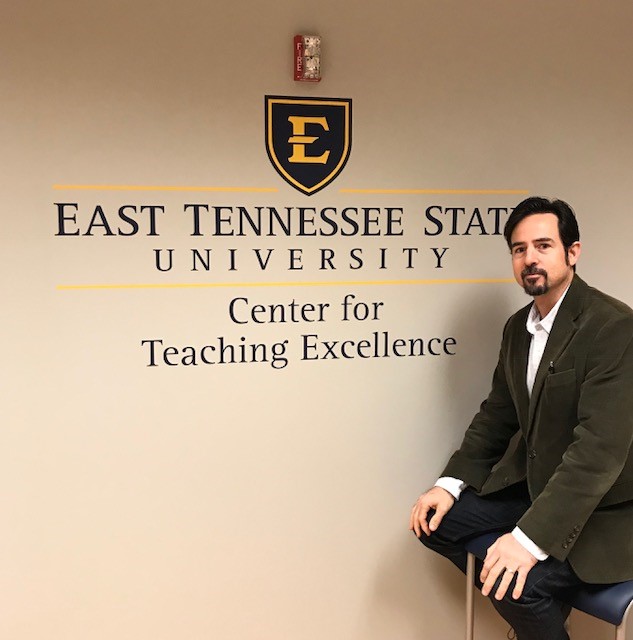
Mathematics teacher educator Dr. Ryan Nivens teaches teachers how to teach.
“If you want to be a blacksmith or perfect your curveball, you have to swing the hammer or throw the ball.” True enough, but when it comes to teaching you not only have to practice teaching, you have to learn how humans learn. You can’t just tell students how to learn, you have to create the conditions in which they can experience it for themselves. Experiential learning is the cornerstone of Nivens’ teaching philosophy.
A typical class session with Nivens begins with an activity such as error analysis of common math mistakes, for example adding fractions. Too often, teacher candidates only identify procedural errors in student work, but are unable to analyze and articulate how such errors show a lack of underlying mathematical knowledge. Class continues with hands on activities, discussion and group problem solving.
Nivens believes math education is undergoing a renaissance. “The way most students were taught math is not how we teach them to teach math now.” The emphasis now is on developing real mathematical knowledge rather than memorization of tables and formulas. This often involves teacher candidates learning to present mathematical concepts and problems in different forms and asking their students to explain steps they can take to solve them.
Assessment of teacher candidates reflects this shift. Noting that teacher candidates (and their students alike) can pass a test without really understanding the underlying concepts, Nivens describes the authentic assessment approaches his department uses to plumb the depths of their teacher candidates’ understanding. A capstone project for the “edTPA” which is required for teacher licensure, involves finding, implementing, and reflecting on lesson plans and curriculum. The result is a portfolio of work which describes each teacher candidate’s unique experience and growth as a teacher. Plus, it is impossible to plagiarize such a project, as any authentic learning experience is.
Nivens also mentors new faculty members. This semester he is leading a faculty learning community which helps acculturate new faculty to ETSU and the realities of the 21st century professoriate. “We focus on the three pillars: teaching, research, and service.” Nivens’ own research interests and experiences make him ideal for this role. He started doing professional development sessions on educational technology his first year as an 8th grade math teacher and has been involved with teacher training and development his entire career. His most recent publications address identifying quality scholarly publishing outlets in mathematics education. The changing dynamics of scholarly publishing is an issue of vital concern for new and established faculty alike.
Good teaching calls for continual reflection and improvement and Nivens believes maintaining high standards for yourself and your students is essential. The content we teach may not change much but we should differentiate between good and excellent when it comes to teaching.
By Phil Smith
-
Fall 2017: Robert Beeler
Featured Teacher: Dr. Robert Beeler
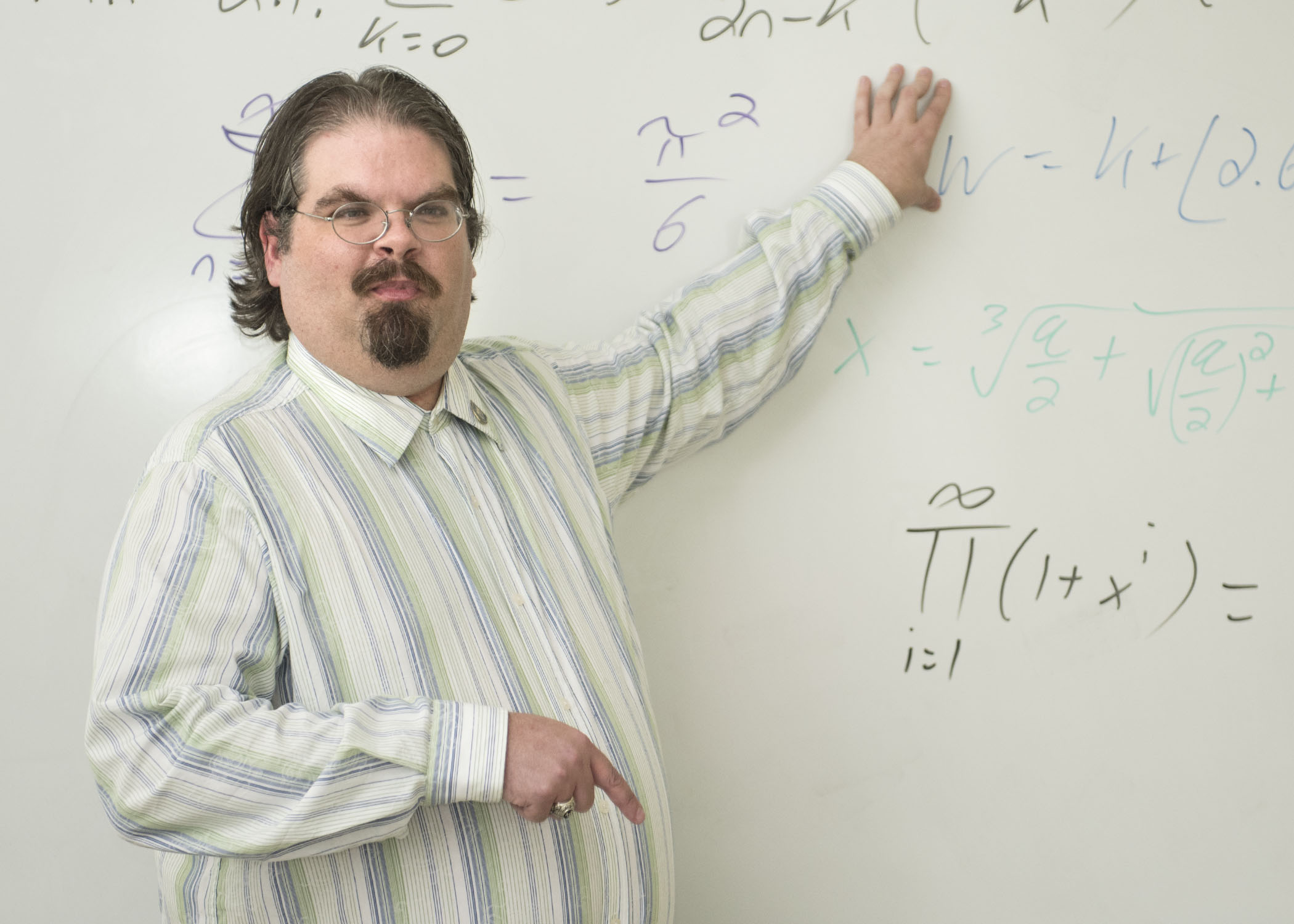
An associate professor in the Department of Mathematics and Statistics in the College of Arts and Sciences, Dr. Beeler won this year's Distinguished Faculty Award in Teaching. I sat down with him for a conversation to learn more about his thoughts on teaching.
On becoming a teacher
Like many faculty, Beeler began teaching as a graduate assistant with little formal training beyond a teaching seminar in graduate school. He soon warmed up to the role and sees his passion for mathematics and problem solving as central to his success as a teacher. "If you do what you love and come to class well prepared, your enthusiasm will be contagious and inspire students." There is also a lot of hard work involved with good teaching. Beeler advises new teachers to engage in continual introspection about their teaching. Be observant and reflective and always asking yourself questions about what is going on in the classroom: Are students engaged? How could the group activity today have gone smoother? How can I explain this concept or come up with a better example? Asking such questions and being willing to adapt to needed changes as the class unfolds makes for a richer experience for students and teacher alike.
On group work and active learning
Dr. Beeler discovered the power of group work almost by accident. Feeling a little under the weather but not willing to cancel class he was not able to lecture the whole period and so put groups to work solving problems. This turned out to be so beneficial that he incorporated it as a regular practice. Giving students a chance to work on a few homework problems during class helps them track their own understanding and ask questions before trying it on their own.
On teaching and research
Teaching and research are sometimes seen as conflicting priorities for faculty, but Dr. Beeler sees them as interrelated and finds many ways to apply his research to his teaching. “Sometimes even if an idea or problem is not publishable, I can see how it would work well to illustrate a point with students.” Research inspires teaching, and questions that come up in the classroom sometimes inspire research. Another benefit of research is perspective. The messy complexities of research help him remember and empathize how challenging his courses may be for students.
On teaching as performance
Is teaching a kind of performance art? Does adapting a stage persona and using dramatic techniques help make you a more effective teacher? Beeler thinks there is something to this. Your passion and enthusiasm come through in your tone of voice, body language, and dramatic pauses. “I like to end class with a cliffhanger. I'll present some problem or question that piques their curiosity and gets them thinking and gives them something to look forward to next time.”
By Phil Smith